
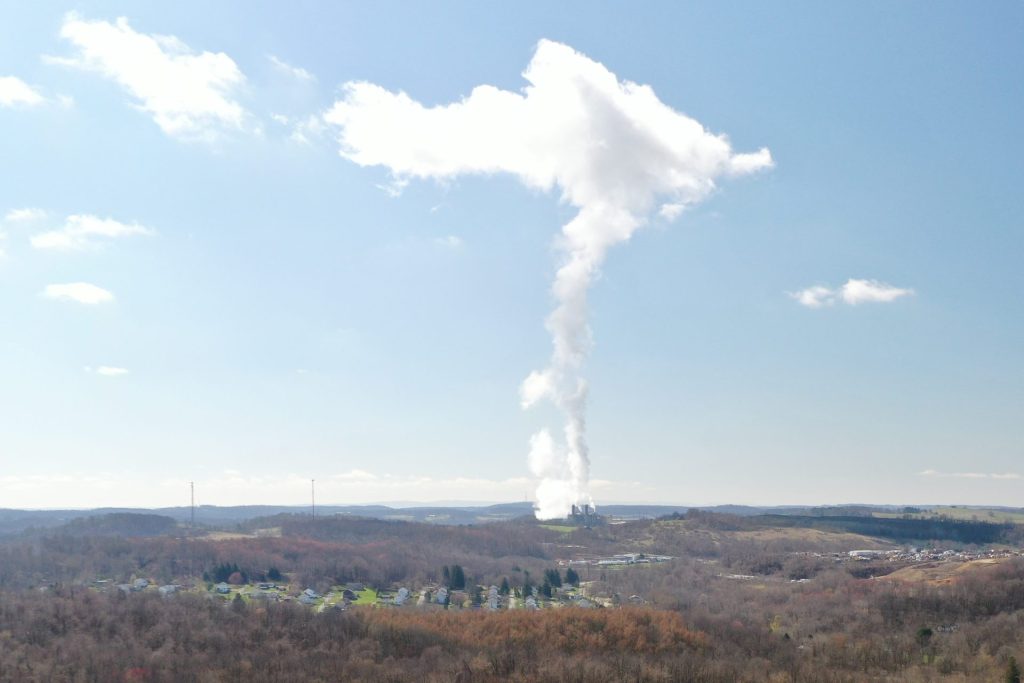
After over an year and a half of organizing by local residents and environmental groups, the Pennsylvania Department of Environmental Protection (DEP) hosted a hearing on Tenaska Westmoreland’s air quality permit draft.
On February 4, 2026, over 60 people from South Huntingdon Township and surrounding areas gathered to provide testimony on Tenaska Westmoreland’s draft Title V Operating Permit (TVOP). At least 17 people registered to give spoken comments.
What is a Title V Operating Permit?
Title V Operating Permits (TVOP) are governed by federal law under the Clean Air Act. TVOPs are required for all “Major Sources of Air Pollution,” or facilities where emissions of pollutants reach certain thresholds.
A TVOP can’t set new limits on emissions (which are determined during the Plan Approval/Construction Permit phase). Rather, a TVOP consolidates all the separate air permits that apply to a facility, making it simpler and quicker for DEP to monitor and enforce. TVOPs also set requirements on monitoring frequency and allow for monitoring data to be publicly accessible. In part, these permits enable citizens to pursue legal action against facilities that are chronically out of compliance with applicable federal and state laws.
Troubles with Tenaska’s draft permit
According to an in-depth analysis by attorneys and engineers from the Environmental Integrity Project, Tenaska’s draft permit doesn’t fully comply with the Clean Air Act. The monitoring requirements outlined in the draft permit don’t require the facility to test for certain emissions frequently enough to ensure compliance with the limits set forth in the Plan Approval. According to the Environmental Integrity Project, these omissions make the document illegal under federal law and must be corrected before the draft permit can be issued.
According to the EPA website, Tenaska’s facility has been in violation for several quarters in the past few years. (See the historical data here and here)
Community asks for more monitoring, data transparency
At the hearing, DEP representatives gave a short opening presentation, in which they described the permit, and why it took years for Tenaska to apply for one.
Thomas Joseph, DEP’s lead air quality engineer on this permit, said that Tenaska has been modifying its facility since it opened in 2018. It applied for the TVOP after those modifications were done, which is standard practice. Mr. Joseph noted EPA now requires facilities to apply for a TVOP within 12 months of commencing operation.
Many commenters focused on the need to increase and improve the facility’s monitoring requirements. They also asked for more transparency from the facility about their emissions. Residents described health concerns related to air pollution. People who live near the facility want timely air quality data, so they can make informed decisions about their health.
“All data that emission monitors collect must be recorded and reported to the DEP,” stressed resident Janet Roslund. “Because of the immediate impact pollutants can have on public health, real-time reporting to DEP should be enforced.”
Likewise, Santosh Muralidaran from the Environmental Health Project described the people that live in the area near the facility, who might be at a higher risk of health problems from air pollution.
“The communities near Tenaska already have a non-skin cancer rate that is worse than 79% of the U.S. population, and a quarter of the community is above the age of 65,” Muralidaran said. “There are additionally two elementary schools and one middle school within a 5-mile radius of the facility. All these people with preexisting health conditions, all these senior citizens, and all these young children are being exposed to a high, toxic number of pollutants from Tenaska.”
MWA’s comment, delivered by Youghiogheny Riverkeeper Eric Harder, emphasized the importance of building trust between the operator, elected officials, and nearby residents. MWA called on the company to voluntarily provide all emissions and monitoring data to DEP and the public. We suggested a meeting with key stakeholder groups to discuss concerns.
A representative from Tenaska attended the hearing and spoke about the facility. Two employees of Representative Eric Davanzo’s office were also in attendance, but did not provide comment.
What’s next?
Now that the hearing and comment period is over, DEP must review and consider all written and oral comments provided on the TVOP draft. If DEP finds that the suggested revisions are warranted, the draft permit will undergo rewrites to incorporate them. DEP will also produce a “Comment Response Document” that addresses each of the concerns raised by commenters and how the concern is resolved.
The revised TVOP and the Comment Response Document will be publicly available. DEP is only required to incorporate those revisions required by the applicable state and federal laws. In an ideal world, all of the residents’ revisions would be incorporated.
If you have any questions about this campaign, or you’d like to get involved, reach out to Em@mtwatershed.com, or call us at 724-455-4200.