
Nate Ricketts
Community Organizer
I grew up in Pittsburgh’s East End, nestled between the city’s three rivers. I remember as a child, my grandma was driving us across the Monongahela when she joked, “All that water is going to Mexico!” While certainly a bit of an oversimplification, that helped me to gain perspective on how watersheds work, and later how extractive industry impacts everything downstream.
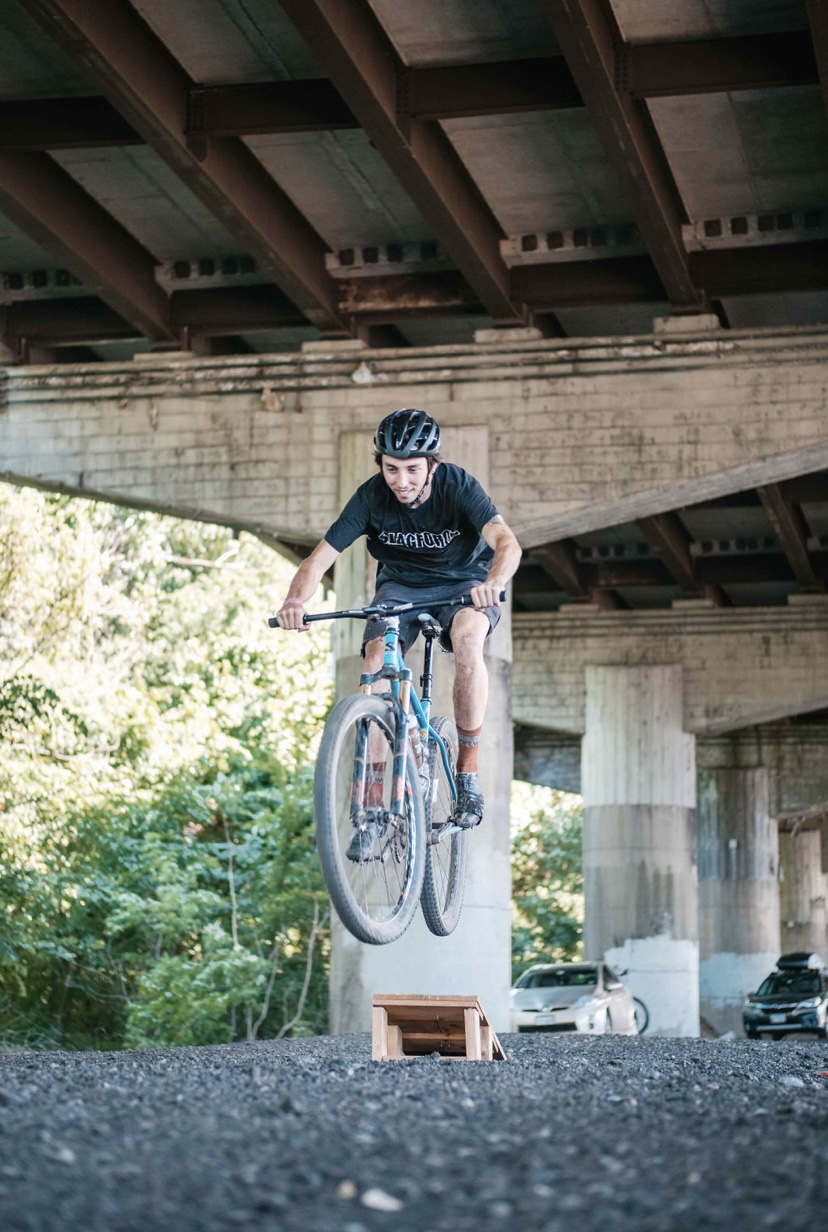
For a major-ish city, Pittsburgh has decent access to nature. In high school I became absorbed with cycling because of the liberty it afforded me. I could ride my bike anywhere I wanted, and so that’s what I did. When it came time to ship off to college in Central Pennsylvania, I rode my bike there too, while my family graciously taxied my belongings for the move-in. On that ride, I encountered the Buena Vista Iron Furnace on the Ghost Town Trail and stopped to read the placard. I had never seen an old blast furnace, and before then, I hadn’t given a thought to industrial history. My penchant for exploration quickly turned into a preoccupation, and I began spending almost all of my free time pedaling around rural PA, often hunting for collapsing 19th-century iron furnaces.
In case you want to find one yourself, furnaces— depending on their state of disrepair— resemble a giant obelisk. Sometimes they look more like a pile of rubble. Usually there is a mansion somewhere in a two-mile radius, and almost always there is a stream nearby. These sites are haunting reminders of why Pennsylvania has almost no old-growth forest, and they’re an early culprit for why many of our creeks and streams gush red. In a roundabout way, they are why I ended up at MWA. They are monuments to our region’s existence at the intersection of extraction and its environmental costs, and they compelled me to help and untangle that knot.