
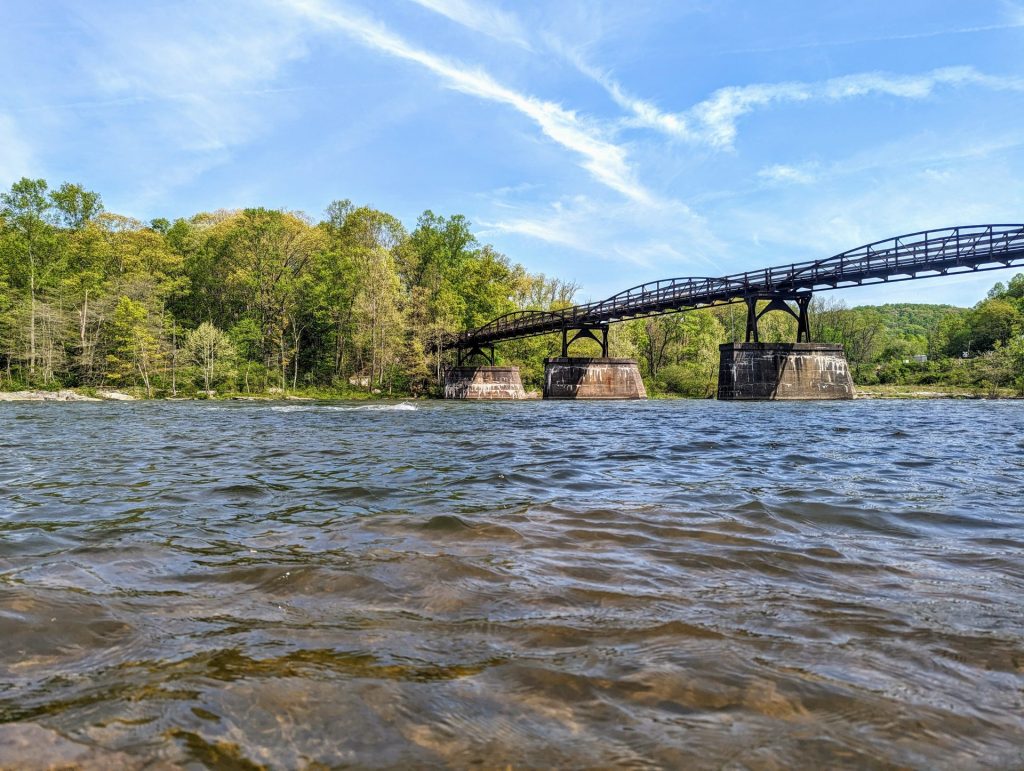
It’s here; the middle of summer. The days are long, the sun is hot, and the swimming holes of the Youghingheny River Watershed are calling your name! Before you go dipping your toes and splashing about though, take a moment to assess the water you’re planning to swim in!
Why do we test the water?
You may not know what’s lurking in the water. Beyond the usual stuff (heavy metals, nitrates, and sulfates), bacteria is all too common in the freshwaters of Pennsylvania. E.coli bacteria, most often found in the intestines and digestive tracts of animals and humans, is a common containment of our waterways. According to the USGS, E. coli strain O157:H7 is the most frequently isolated type of fecal related bacteria found in fresh water across North America. E.coli has the potential to make humans very sick if ingested and can cause gastrointestinal problems, infection in open wounds, and an increased risk of urinary tract infections.
Not all bacteria is bad. Both good and bad bacteria are present in surface water. (Bad bacteria being that which can make humans sick). But where does all that bad bacteria come from?
As mentioned above, E.coli is associated with the digestive tracts of animals and humans. It comes from fecal waste or – less politely – poop. This fecal waste (and thus bacteria) can find its way into our stream and waterbodies a few different ways.
Where does E. coli come from?
Some common causes of fecal contamination are agricultural run-off from manure that has been spread or animal deposited on farm fields, faulty consumer sewer, septic, or other waste treatment systems, and even direct effluence from municipal treatment plants.
While bacteria that’s being directly deposited (point-source pollution) via a pipe is relatively easy to identify and regulate, run-off or leaching of bacteria (nonpoint-source pollution) can be much harder to nail down.
Nonpoint pollution is often called “runoff.” See the below diagram from Washington State University Extension:

Most stream swimming holes across Western Pa are not officially designated for public swimming or water contact recreation, but hundreds of locals and visitors come in contact with those waters every summer. These well-known, but unregulated, spots are not consistently monitored by state or federal officials for bacteria contamination. The burden of accessing the risk involved in coming in contact with these waters falls upon the swimmer or recreator.
How does the testing work?
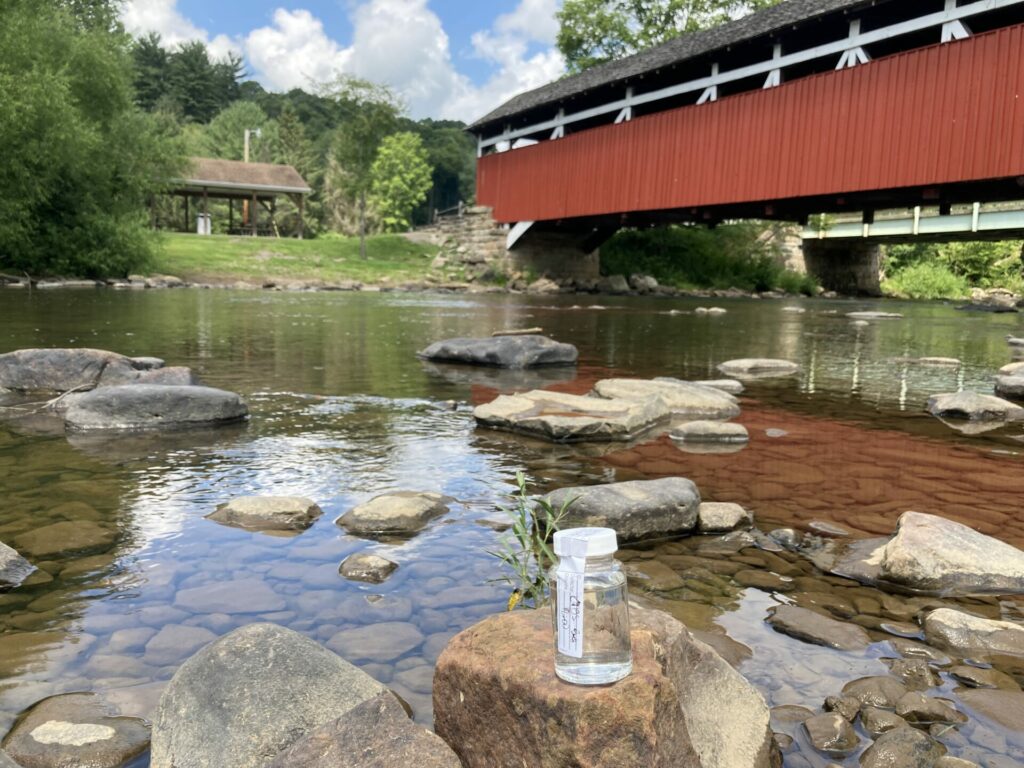
Enter the Swimmable Waters Program. The Mountain Watershed Association and Youghigheny River Water Keeper, with guidance from the Swim Guide, have been monitoring these unregulated swimming spots around the Yough since 2014.
MWA staff and a dedicated group of trained volunteers sample some of the most popular swimming spots around the Yough and analyze them for the presence of E.coli. We collect 100mL water samples on Wednesdays from the beginning of May until the end of September.
These samples are brought back to MWA’s lab for preparation and analysis. These analyses are able to quantify the Most Probable Number (MPN) of Colony Forming Units (CFU) of bacteria present in the 100ml water sample, which gives us an estimate of the amount of bacteria present in that waterbody. From there a threshold is used for individual sampling events to establish a pass/fail model. These results are then made available publicly on our website. They are also sent to subscribers via text update and uploaded to Swimguide.org.
Click here to subscribe to email or text alerts or text YoughSwimmableWaters to 84483.
Our current threshold is set at 235 CFU. If a sample indicates there are 235 CFU of E.coli bacteria or more present, the swimming location it was from fails and is marked “RED” on our website. This means your exposure to those waters, with the bacteria levels that were present at the time of sampling, would increase the likelihood or risk of health complications that are associated with coming in contact with E.coli bacteria.
While our results help the community make informed decisions about swimming and water-contact, they aren’t the end of what should be your assessment of the water you plan to swim in. Keep in mind that water quality is always changing, and our results show us a snapshot of the bacteria present at any given time.
What have this year’s results been?
Heavy rainfall and unexpected weather conditions can impact the water quality and instantly increase the bacteria count present in surface waters and streams. A good rule of thumb is “if it’s brown – Turn Around!” Brown water indicates an increase in sedimentation usually from run-off, which mostly likely includes bacteria laden soil and manure, especially if there are farm fields upstream or uphill of where you are swimming.
The 2025 Swimmable Waters season has proven to be a bit tricky. With the increased rain and subsequent flooding that occurred throughout May and into the better part of June, the swimmable waters results have been far from favorable. There was one week that the flooding was so intense that a sampling route was cancelled due to concern for volunteer safety and another week where all sampling events were scrapped for the same reason. The heavy floods also majorly increased bacteria counts in all waters, including those with a history of being decently clean.
We recommend checking a swimming site for the results from the most recent sampling event, but it is also not a bad idea to get an idea of the trend of passing/failing that is associated with a site. If a site is “RED” more often than it is “GREEN”, perhaps give more consideration to your decision to swim there. Below is a current chart showing the outcomes of sampling results for the efforts made so far this Swimmable Waters Season.
Keep in mind that the beginning of our 2025 sampling season had major rain and flooding events that increased bacteria present in all waterways. If these weather events slow down, we’ll likely see our water sampling results improve.
If you have any questions or need further insight on our results, please reach out to Eric Harder, our Youghiogheny Riverkeeper at eric@mtwatershed.com

Why isn’t there more data for Blue Hole? Read why HERE