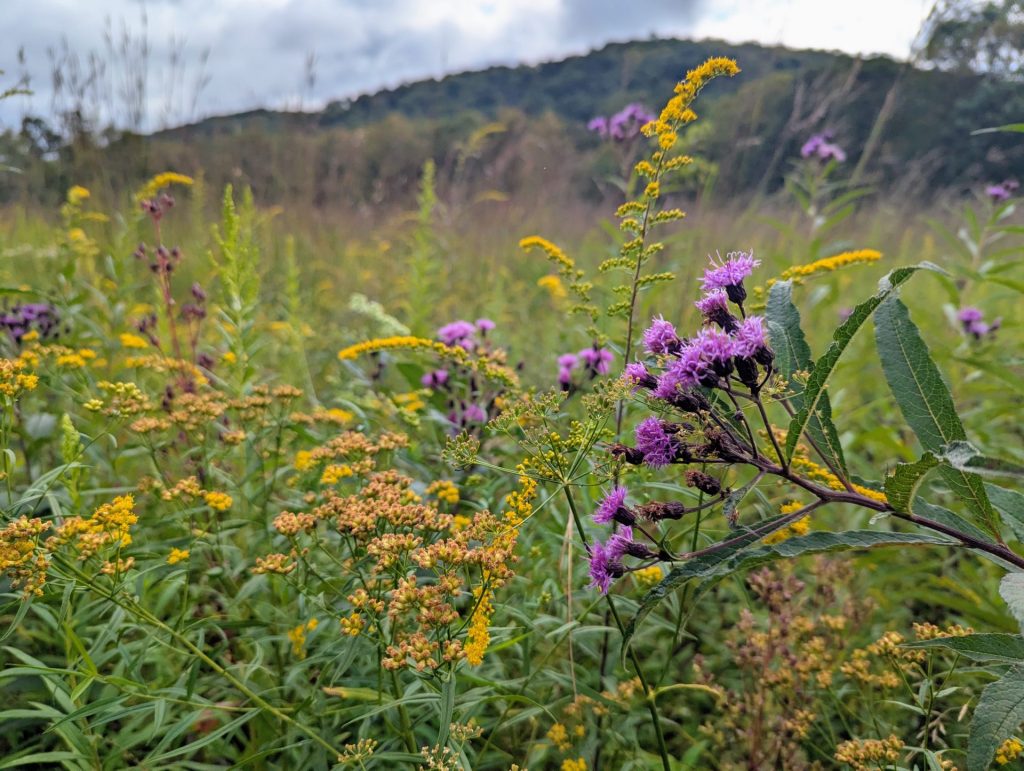
September is here, and with it has come a refreshing blast of cool weather throughout the Youghiogheny River watershed. Look around in local meadows to see summer’s stunning late bloomers. Goldenrod, ironweed, black-eyed Susan, tiny asters, and others will brighten the fields and provide a last burst of energy for hungry pollinators before winter comes.
Bees, flies, beetles, and hummingbirds, and butterflies are all chowing down on nectar this time of year, banking energy for the colder months ahead. But one striking insect stands out from the rest – the gorgeous orange and black monarch butterfly.
In North America, monarchs are grouped into two long-distance migratory populations. The eastern migratory population is the largest and overwinters in the mountains of central Mexico. The western migratory population primarily overwinters in coastal California.
Eastern North American monarchs embark on a remarkable migration each fall. These insects, which weigh less than a paperclip, cover thousands of miles to reach their winter homes. When spring arrives, they migrate back north, seeking out milkweed to lay their eggs and nectar plants to eat.

Milkweed is essential to healthy monarch populations – it’s the only plant on which monarchs will lay their eggs and the only source of food for baby caterpillars. The monarch’s bright orange color warns predators that eating them can be toxic, and monarchs obtain these toxins (called cardenolides) by consuming milkweed plants.
But rapid human development has paved and plowed over millions of acres of milkweed, and herbicides used in croplands, pastures, and roadsides have reduced this valuable resource even more. Likewise, logging has destroyed large parts of the sheltered forests that monarchs need to survive the winter. This loss of habitat has caused monarch populations to decline over the years.
(As of now, the monarch is not listed as an endangered species in the United States, although the US Fish and Wildlife Service has frequently proposed to list the monarch under the Endangered Species Act.)
But you can still help the monarchs!
A well-planned pollinator garden planted with the right species of milkweed can be the difference between life and death for these incredible butterflies. Different species of milkweed thrive in different parts of the country. In the Youghiogheny watershed, you’ll find Common Milkweed (Asclepias syriaca), Butterflyweed (Asclepias tuberosa), and Swamp Milkweed (Asclepias incarnata).
Visit a local native plant sale, or buy milkweed directly from an organization like Monarch Watch. It’s a great idea to plant variety of milkweed, plus other plants that provide adult monarchs with nectar. Choose plants that bloom at different times of the year to help monarchs year-round!
Check out these monarch-friendly plants:
- Goldenrod (Solidago): Showy plants goldenrod are a top nectar source for monarchs in the fall. FYI: Goldenrod doesn’t actually cause allergies in most people – that’s ragweed! Native goldenrods are very important to pollinators and host over 126 species of butterflies and moths.
- Joe-Pye weed (Eutrochium): This tall, flowering, pollinator-friendly plant is drought tolerant. Its fuzzy pink flowers bloom in the fall.
- Ironweed (Vernonia): Monarchs love these bright purple blooms! Find ironweed can be found in prairies, riverbanks, wetlands and marshes—and along the road.
- Asters (Symptotrichum): Asters like the New England Aster are great fall bloomers—often showing off daisy-like purple and pinkish flowers from August through October, making it an excellent late-season bloomer and a key food source.
If you don’t have space for a full garden, try making a small raised bed or growing a few plants in pots outside. You can also help pollinators by avoiding the use of pesticides and herbicides on your property.
Helping monarchs helps the wider population of pollinators, like native bees, moths and even birds. Your little pollinator garden becomes part of the greater network of greenways and habitat islands that these animals need to survive and thrive.