
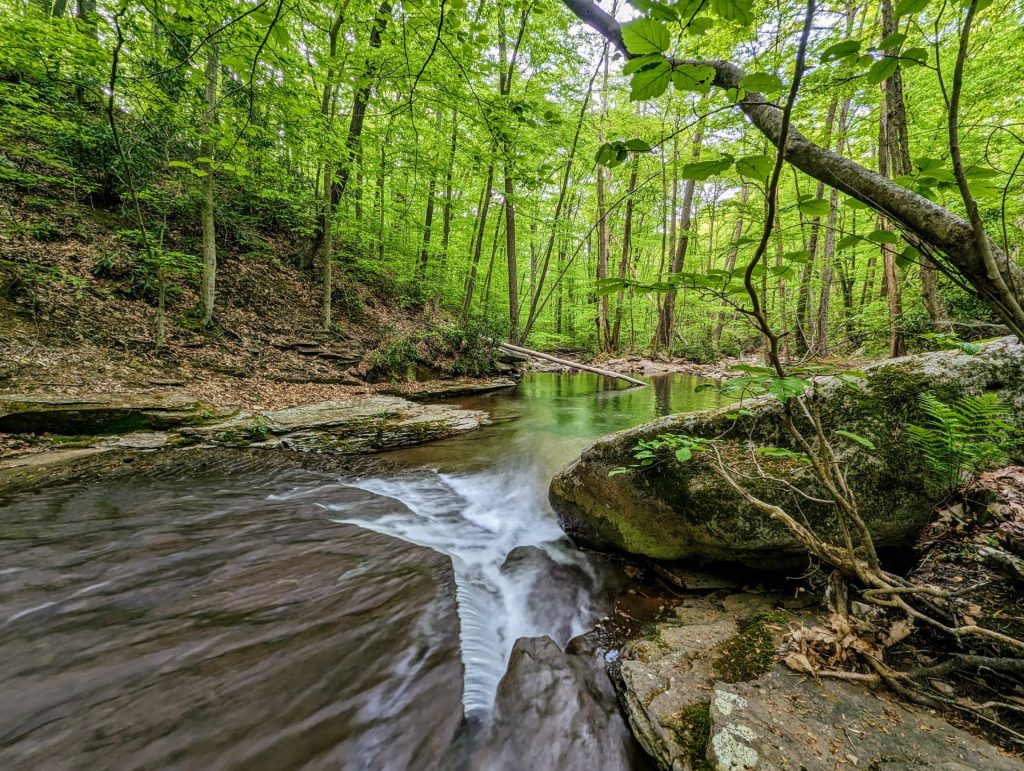
After months of coordinating with the Pennsylvania Dept. of Environmental Protection (DEP), we were notified that the Solid Waste Dept at DEP has issued a Notice of Violation (NOV) to Highlands Sporting Clays for failure to comply with the Shooting Range Stewardship Best Management Practices, resulting in the contamination of Blue Hole Creek with Lead, Cadmium, Aluminum, Zinc, and Manganese.
In our original blog post, we detailed the contamination in Blue Hole Creek along with our monitoring efforts to track the levels in the watershed. Until now, we were not able to specifically detail who the culprit was due to the need to follow due process, ensure proper processes that avoid speculation, and legally protect our organization.
Now Highlands Sporting Clays will need to take multiple steps. This process will likely include a robust site assessment, extensive site remediation, long term monitoring, and potentially other stipulations that will ensure the site is in compliance and no longer contaminating soils, groundwater, and surface water resources. The next action from DEP would be a Consent Order Agreement (COA), which would detail the necessary actions that Highlands Sporting Clays will need to take to address the contamination issues.
MWA is disappointed about the length of time it has taken DEP to formalize the NOV. Initial water quality testing was completed in 2023, which indicated issues with Blue Hole Creek. MWA tested the creek and sent a complaint to the DEP in April 2025. We hope to see Highlands Sporting Clays remediation efforts begin later this year.
DEP has assured us that water quality in Blue Hole Creek will start to return to the Exceptional Value designation with no impairment. Regardless, MWA will continue to monitor the water quality of Blue Hole Creek, Fall Creek, the roadside spring along Blue Hole Creek, and several other waterways in the immediate vicinity. We aim to ensure no contamination continues, remediation efforts are effective, and that the public has the proper information to safely recreate and consume water in our beloved watershed.
Highlands Sporting Clays has been completing preliminary site remediation, which is permissible under the Shooting Range Stewardship plan. These efforts include removing the spent shot wads and clay pigeon debris from the course surface and applying lime and phosphorus to reduce the amount of toxins leaching into Blue Hole Creek.
Our most recent monitoring efforts displayed the highest concentration of lead (425 ug/l) of all of our sampling visits. During that sampling, we collected a water sample from Laurel Hill Creek. No detectable lead concentrations were observed in Laurel Hill Creek. At our most downstream sampling location (where Blue Hole enters Fall Creek), the concentration of lead in was 2.7 ug/l. However, we are concerned that the lead is no longer in solution and is forming a solid as pH levels increase as water flows downstream.
Questions we have include:
- Where is this solid form of lead ending up?
- Is there lead in the streambed where macroinvertebrates reside?
- Have fish populations been impacted by the contamination?
- Will remediation efforts be sufficient enough to return the stream to an Exception Value Waterway?
- Have the groundwater and surrounding aquifers been contaminated?
- How will Highlands Sporting Clays address the Notice of Violation and requested processes from the DEP?
- Will they become transparent and better understand their unique responsibility as a property owner and business operator in a headwater area?
- Are there other shooting ranges in the watershed that are causing similar damages?
We hope to find the answers to these questions through more monitoring and coordination with the DEP.
We would like to thank the Department of Conservation of Natural Resources (DCNR) staff and Forbes State Forest for working with us and sharing in the passion of clean waterways in our Laurel Highlands. We feel our partnership with them was imperative to creating awareness about the issue to ensure the general public is educated about the contamination and dangers of recreating in/drinking from Blue Hole Creek.
Tracking this impact has put a damper on summer swim plans and had a sobering effect on access to clean water in the Laurel Highlands. But MWA responded quickly, with a diligent, all-hands-on-deck approach and widespread public support for our efforts. Our waterways are a critical component to quality of life and enjoyment in the Yough watershed and Laurel Highlands region. Our watershed village is strong. Always remember – if you see something, say something. We’re here to help.
For the River!
Contact Youghiogheny Riverkeeper, Eric Harder, at Eric@mtwatershed.com for more information.